
Notícias
Paraíba is recognized in the Senate as one of the five states with the highest literacy rates in Brazil
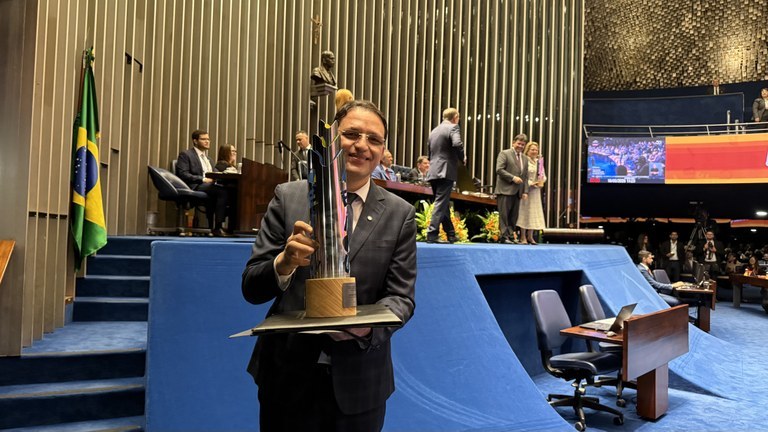
The Plenary of the Federal Senate, in Brasília, was the stage for one of the most significant moments for Brazilian public education this Monday (18). In a ceremony marked by the recognition of State policies that break the cycle of inequality, Paraíba was recognized as one of the five states in the country to receive the Governors' Commendation for Children's Literacy at the Right Age. On the occasion, the State Secretary of Education, Erivonaldo Alves, represented Governor Lucas Ribeiro in receiving the honor, which highlights the state administrations with the best educational indicators in the country.
Established by Resolution 8/2025, the commendation was created with the intention of being a certification of governmental effectiveness, recognizing managers who have shown the most consistent progress in literacy and in reducing learning disparities. The initiative seeks to reinforce the Legislative's commitment to the National Education Plan and the National Commitment to a Literate Child. The selection process was rigorous, conducted by a technical committee composed of representatives from the Senate, the Ministry of Education, INEP (National Institute for Educational Studies and Research), UNICEF, and partner institutions, who evaluated four fundamental areas: literacy results, equity, teacher training, and collaborative framework.
Paraíba's prominence on the federal stage is supported by figures that the Senate Agency classified as exemplary. Paraíba achieved a 71% literacy rate among students at the appropriate age, a 15 percentage point increase compared to the previously recorded 56%. Furthermore, the state obtained the maximum score in the continuing education area and registered a net enrollment rate of 91.6%, one of the best rates among the awarded states. With this performance, Paraíba not only met the goal established by the Ministry of Education but surpassed it two years ahead of the schedule set for 2027.
The success of Paraíba's management is also reflected in the National Commitment to Literacy Seal. Of the 223 municipal school systems in the state, 98.5% received some level of certification, with 101 municipalities in Paraíba achieving the Gold Seal. Another determining factor for the award was the adoption of educational criteria in the allocation of ICMS (a state sales tax), which encourages municipalities to engage with the quality of education.
The Paraíba strategy is based on integration between the state and the municipalities. During the award ceremony, led by Senator Cid Gomes, who also authored the tribute, Erivonaldo Alves emphasized that the result is the fruit of a humanized vision of management. “Teaching a child to read and write at the right age represents the greatest act of social justice that a public administrator can perform, as it means handing the key to citizenship to those who need it most. In Paraíba, the government decided that a child's zip code should never define their destiny, and this recognition resonates in the lives of children in all regions, from the Sertão to the coast,” he said.
The secretary further detailed that this progress is the result of a care ecosystem designed to integrate physical and pedagogical support. The investment of R$ 208 million, allocated to the construction of 215 new daycare centers, also ensures that entry into school life occurs in high-standard environments. Simultaneously, technical strengthening through the Reading and Writing in Early Childhood Education Program (Proleei) guarantees methodological unity among the nearly 8,000 trained teachers. "Our strategy was to ensure that physical expansion went hand in hand with human qualification, because we understand that a modern structure only transforms the reality of those on the front lines when it finds professionals prepared to mediate knowledge and support the cognitive development of each child," Erivonaldo pointed out.